If you want the simple answer first, FreshBooks wins for most freelancers, service-based businesses, and small teams. 🏆
Why? Because FreshBooks is much easier to use, less overwhelming, and better suited for people who mainly need invoicing, expense tracking, time tracking, and simple accounting without dealing with too much complexity.
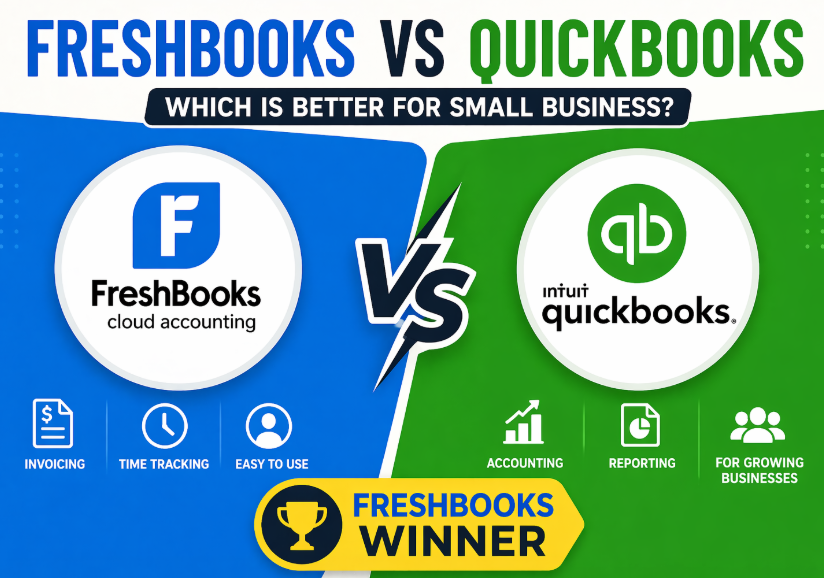
QuickBooks is still powerful, but for many users, it feels heavier than necessary. It offers more advanced accounting tools, but that extra depth can also make it harder to manage if you just want something clean and practical.
👉 So if your priority is ease of use, faster invoicing, and smoother day-to-day financial management, FreshBooks is the better choice.
🤔 FreshBooks vs QuickBooks: What’s the Main Difference?
The biggest difference between FreshBooks and QuickBooks is simple:
- FreshBooks is built for simplicity
- QuickBooks is built for deeper accounting
That one point explains almost everything.
FreshBooks is designed for people who want accounting software that feels easy from day one. It works especially well for freelancers, consultants, agencies, and service-based businesses that send invoices, track time, and manage client work regularly. The platform is cleaner, simpler, and much less intimidating for beginners. 💼
QuickBooks, on the other hand, is more accounting-heavy. It gives you more advanced tools for bookkeeping, reporting, taxes, and financial management. That sounds great on paper, but for many small business owners, it can also feel more complicated than necessary.
Here’s the easiest way to look at it:
FreshBooks is better if you want:
- Easy invoicing 🧾
- Time tracking ⏱️
- A clean dashboard
- Less accounting complexity
- Faster learning curve
QuickBooks is better if you want:
- More advanced accounting features 📊
- Deeper financial reports
- More complex bookkeeping tools
- Stronger accountant-focused workflows
So when people search FreshBooks vs QuickBooks for small business, the real question is usually not “Which one has more features?”
The real question is:
👉 Do you want a tool that is easier to use, or one that is more advanced but harder to manage?
That’s where FreshBooks gets the edge for most small businesses. It gives enough features for everyday business finance without making the software feel complicated.
📌 What Is FreshBooks? 📘
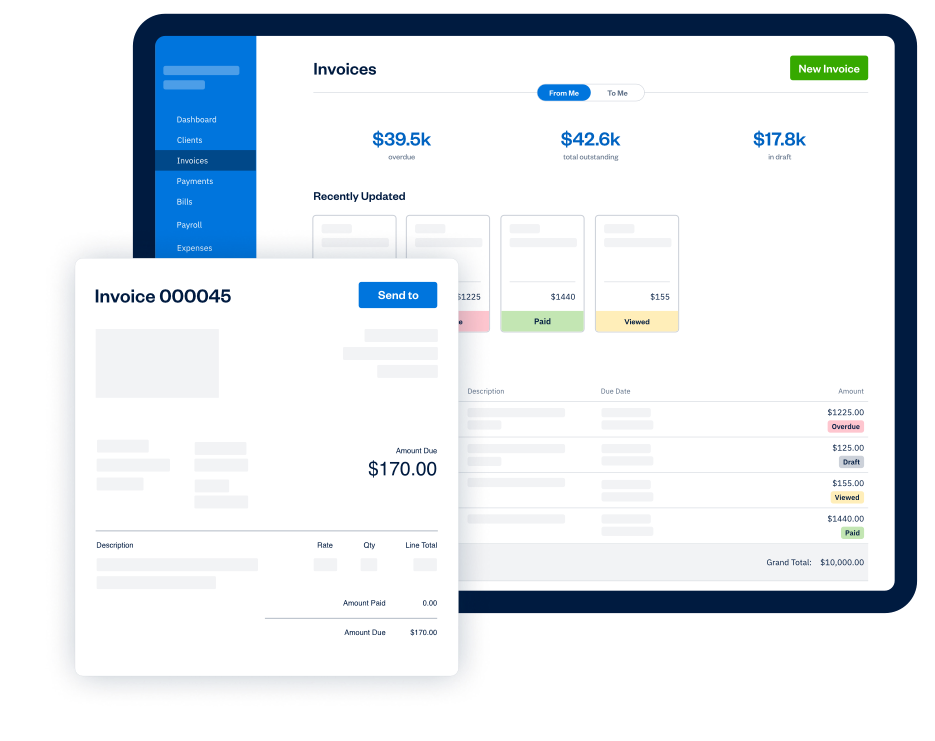
FreshBooks is cloud accounting software designed for non-accountants. It launched in 2003 and now powers over 30 million small businesses.
Who it’s for:
- Freelancers (writers, designers, developers)
- Agencies (marketing, creative, PR)
- Consultants (business, IT, fitness)
- Tradespeople (plumbers, electricians, painters)
- Any service business with less than 20 people
Real-world use case:
Imagine you’re a freelance graphic designer named Jess. You have 12 clients, bill hourly ($75/hr), and hate chasing payments.
With FreshBooks, Jess creates a project for each client. She clicks a timer when she starts working. When done, she clicks “Create invoice” – and all her hours are instantly added. She emails the invoice with a “Pay Now” button.
Clients pay by credit card or bank transfer. Late payment? FreshBooks auto-sends a reminder and adds a late fee. Jess gets paid faster, sleeps better, and never touches a spreadsheet.
📌 What Is QuickBooks? 📗
QuickBooks has been the king of small business accounting since the 1990s. It started as desktop software, then moved to the cloud as QuickBooks Online.
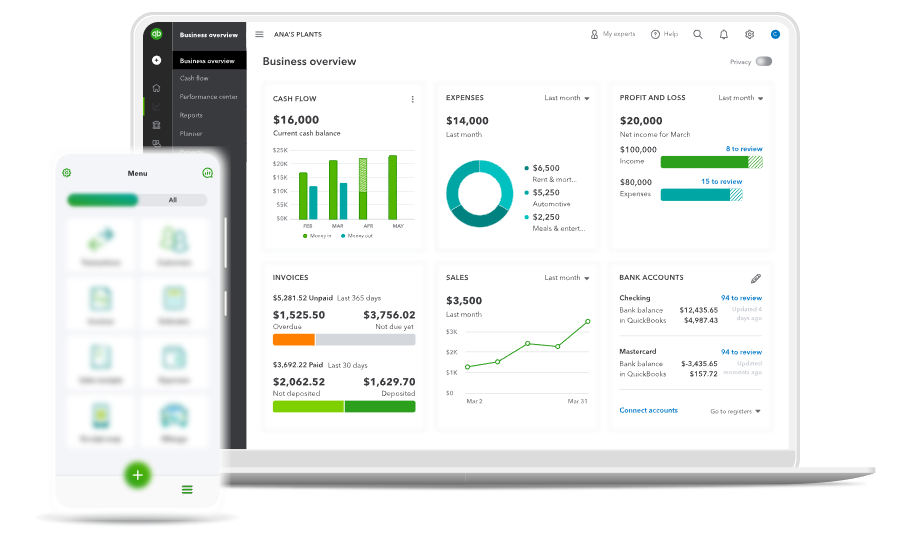
Who it’s for:
- Product-based businesses (retail, ecommerce, manufacturing)
- Growing businesses with 10–50 employees
- Companies with a bookkeeper or CPA on speed dial
- Anyone who needs advanced inventory, purchase orders, or job costing
Real-world use case:
Meet Tom. He runs a small bakery that sells cakes online and in a local shop. He buys flour, sugar, eggs from three suppliers. He has 200+ ingredients and finished products to track. He pays two part-time staff.
Tom’s bookkeeper uses QuickBooks to track every bag of flour sold, every cake inventoried, and every tax payment. QuickBooks generates profit-and-loss statements by product line – so Tom knows his chocolate cake makes money but his gluten-free muffins lose money.
Tom never logs into QuickBooks himself. That’s the point. It’s powerful but requires a pro.
⚖️ Key Differences Explained
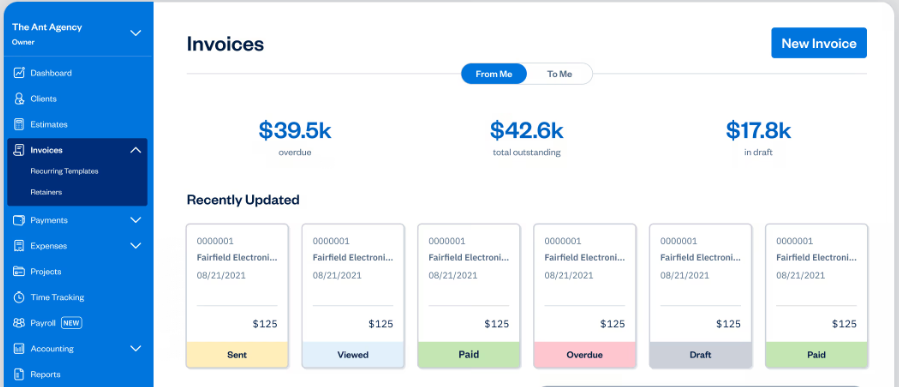
📧 Invoicing Philosophy
💠 FreshBooks treats invoicing as the star of the show. Creating an invoice feels like sending an email you fill in client details, add line items, and hit send. The invoices look modern and professional by default.
💠 QuickBooks treats invoicing as one small part of a larger accounting ecosystem. You’ll navigate through more screens and options because it’s connecting your invoice to general ledger accounts, tax codes, and accounting categories you might not even understand yet.
🧮 Accounting Complexity
💠 FreshBooks uses simplified accounting that makes sense to normal humans. You see income, expenses, and profit. The reports tell you what’s working and what’s not without drowning you in technical accounting terminology.
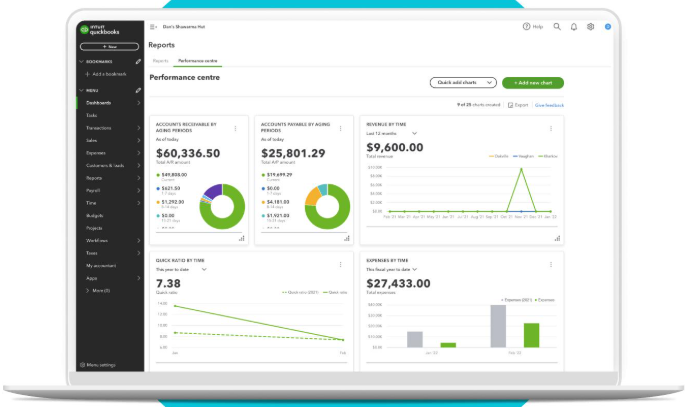
💠 QuickBooks gives you full double-entry accounting, chart of accounts customization, and journal entries. This is fantastic if you know what these terms mean. It’s overwhelming if you just want to know whether you made money this month.
🎯 Ease of Use
I could teach my mom to use FreshBooks in 30 minutes. The interface is clean, buttons are labeled in plain English, and there’s only one logical way to do most tasks.
QuickBooks requires genuine learning time. You’ll watch tutorials, maybe take a course, and probably call support a few times in your first month. The power is there, but so is the learning curve. 📚
👥 Target Audience Reality Check
💠 FreshBooks targets people who sell their time and expertise: coaches, consultants, photographers, designers, lawyers, therapists, and creative agencies.
💠 QuickBooks targets traditional businesses with physical products, employees, locations, and complex financial operations.
| Feature | FreshBooks 💚 | QuickBooks 💙 |
|---|---|---|
| Best For | Service businesses, freelancers | Product businesses, retail, restaurants |
| Learning Curve | 30 minutes ⚡ | 3-5 days 📖 |
| Primary Focus | Invoicing & client management | Full accounting & financial tracking |
| Complexity Level | Simple & intuitive | Advanced & comprehensive |
| Ideal User | Non-accountants | Business owners with accounting knowledge |
🔥 Features Comparison (Detailed & Practical)
📄 Invoicing & Billing
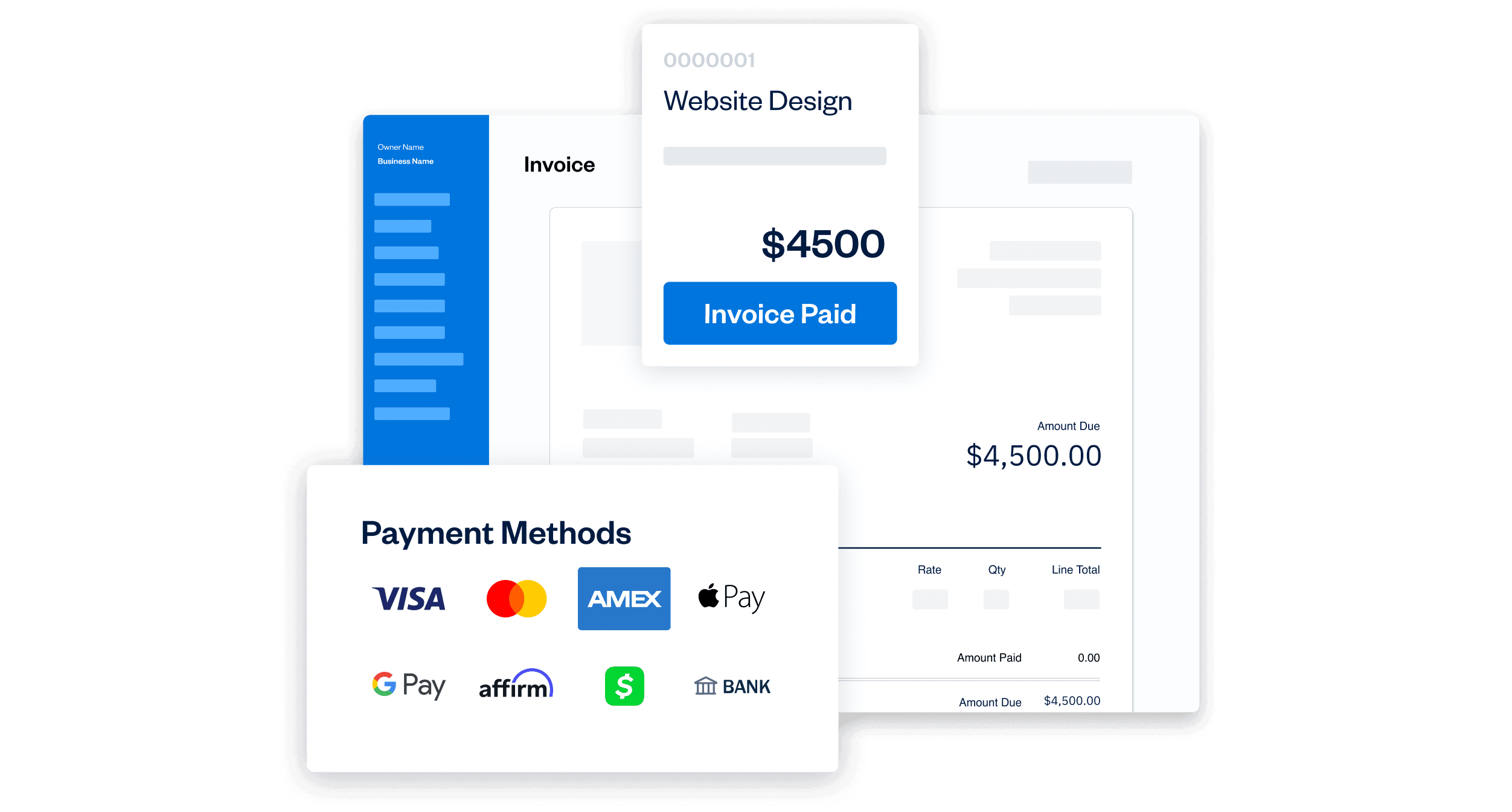
💠 FreshBooks makes invoicing feel effortless. You can create and send an invoice in under two minutes. The system remembers your clients, suggests line items from previous invoices, and lets you set up recurring invoices for retainer clients. 🚀
The real magic happens with payment collection. Clients can pay directly from the invoice through credit card or ACH transfer. You get notified instantly when someone views or pays an invoice. Late payment reminders send automatically, so you don’t have to chase clients awkwardly. 💌
💠 QuickBooks handles invoicing competently but makes it feel more like a necessary administrative task than a streamlined process. You’ll navigate through more screens and encounter accounting terminology that slows you down.
The advantage? QuickBooks connects invoicing deeply to your accounting system, which matters if you need detailed financial tracking but feels like overkill for simple billing.
Winner for invoicing: FreshBooks, hands down. 🥇
📊 Accounting & Reporting
💠 FreshBooks keeps accounting reports simple and actionable. You get profit-loss statements, expense reports, tax summaries, and time tracking reports. Everything displays in clean graphs and plain language. 📈
These reports answer the questions small business owners actually ask: “Am I profitable?” “Where is my money going?” “What do I owe in taxes?”
💠 QuickBooks delivers professional-grade accounting reports that would satisfy any CPA. You can generate balance sheets, cash flow statements, accounts payable aging reports, and dozens of customizable financial reports. 📑
If you understand accounting or work closely with an accountant, this depth is incredible. If you’re a freelance writer just trying to track your income, it’s overwhelming.
Winner for accounting: QuickBooks for complex needs, FreshBooks for clarity and simplicity. 🎯
⏱️ Time Tracking
This is perfect for consultants, lawyers, designers, or anyone who bills hourly. You’ll never forget to invoice for time worked.
💠 FreshBooks includes built-in time tracking that integrates perfectly with invoicing. You can track time from desktop, mobile, or browser. When you’re ready to bill, those tracked hours convert to invoice line items automatically. ⏰
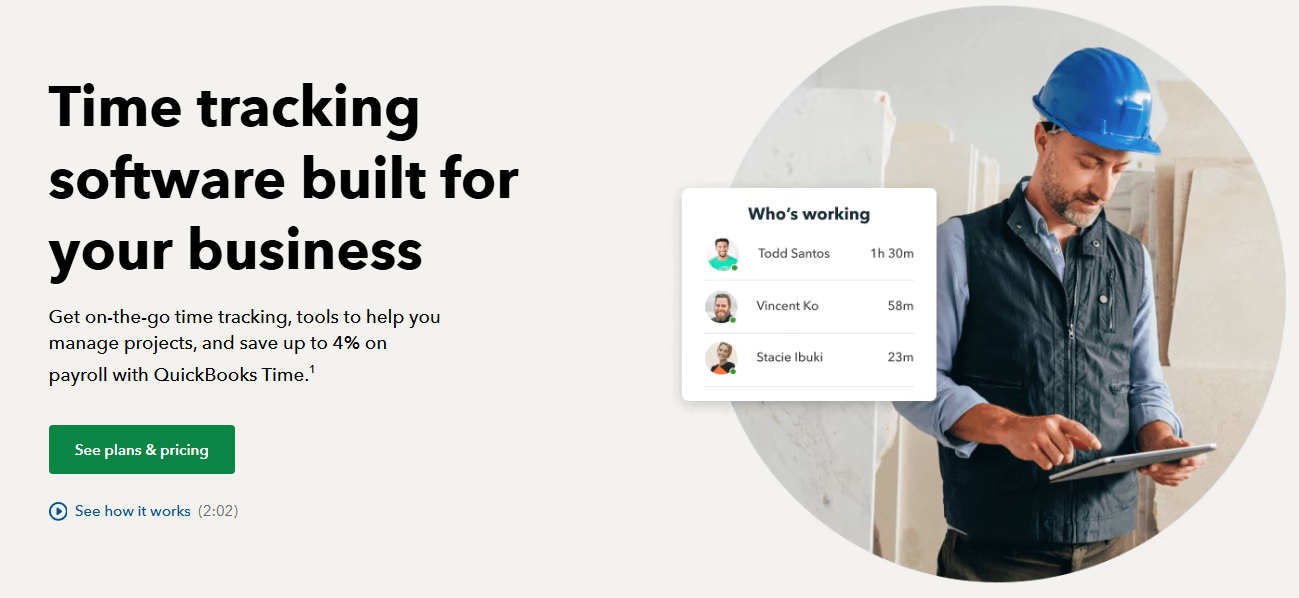
💠 QuickBooks offers time tracking through QuickBooks Time (formerly TSheets), which costs extra. It’s powerful for businesses with employees working different job sites or projects, but it’s another subscription and another learning curve. 💵
Winner for time tracking: FreshBooks, especially for service businesses. ✅
💳 Expense Management
💠 FreshBooks lets you photograph receipts with your phone 📸, categorize expenses, and mark them as billable to clients. You can connect your bank account to automatically import transactions.
The mobile app makes capturing expenses ridiculously easy when you’re traveling or meeting clients. Just snap a photo of the receipt at the restaurant, and you’re done.
💠 QuickBooks provides more robust expense management with rules-based categorization, vendor management, and bill payment workflows. If you’re managing expenses across multiple projects or tracking vendor bills, QuickBooks handles complexity better. 🏦
Winner for expense management: Tie FreshBooks for simplicity, QuickBooks for complexity. ⚖️
🔌 Integrations
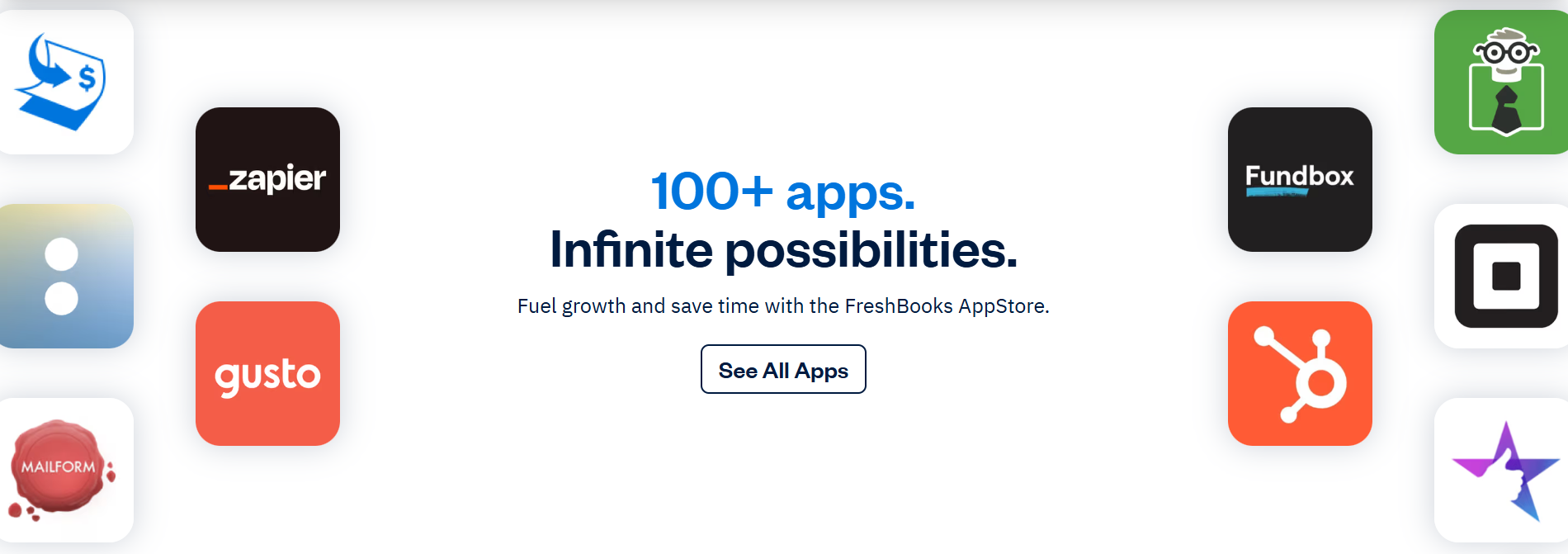
💠 FreshBooks integrates with popular tools like Stripe, PayPal, Gmail, Slack, Zapier, and Google Calendar. The integrations cover what most small businesses need without overwhelming you with options. 🔗
💠 QuickBooks offers hundreds of integrations across every business category imaginable. E-commerce platforms, CRM systems, inventory management, payroll services if there’s a business app, it probably connects to QuickBooks. 🌐
This extensive ecosystem matters when you’re scaling or running complex operations. For most small businesses, it’s more integrations than necessary.
Winner for integrations: QuickBooks for breadth, FreshBooks for relevance. 🎪
| Feature Category | FreshBooks 💚 | QuickBooks 💙 | Winner 🏆 |
|---|---|---|---|
| Invoicing | Beautiful, fast, automated payments | Comprehensive but complex | FreshBooks |
| Time Tracking | Built-in, integrates with invoicing | Separate paid add-on | FreshBooks |
| Expense Management | Mobile-first, simple receipt capture | Advanced vendor management | Tie |
| Reporting | Simple, actionable insights | Professional-grade financial reports | Depends on needs |
| Integrations | 50+ popular apps | 500+ business apps | QuickBooks |
| Mobile App | Excellent, full-featured | Good, accounting-focused | FreshBooks |
Pricing Plans Comparison 💰
Let’s look at what you’ll actually pay. No marketing fluff. Just the real prices from both websites.
I’ve added a table because when it comes to money, clear beats clever every time. 👇
FreshBooks Pricing
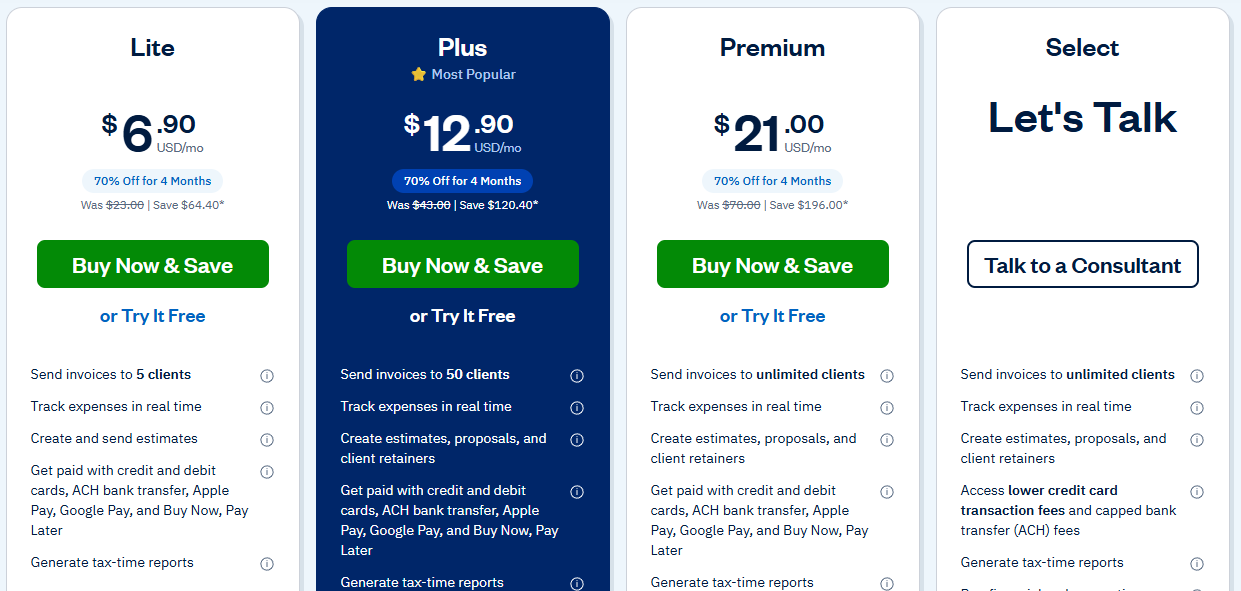
| Plan | Monthly Price (with 70% off promo) | Regular Price | Best For |
|---|---|---|---|
| Lite | $6.90 for 4 months | $23.00 | 5 billable clients – basic invoicing + time tracking |
| Plus ★ Most Popular | $12.90 for 4 months | $43.60 | 50 billable clients – recurring invoices + retainers |
| Premium | $21.00 for 4 months | $76.00 | 500 billable clients – advanced reporting + account manager |
| Select | Custom (talk to sales) | Custom | Large teams or custom needs |
What you need to know:
FreshBooks’ promo is 70% off for 4 months. After that, you pay the regular price ($23–$76/month). But even the regular price is fair – especially for Plus at $43.60 (unlimited invoices, time tracking, proposals, and client payments).
QuickBooks Pricing
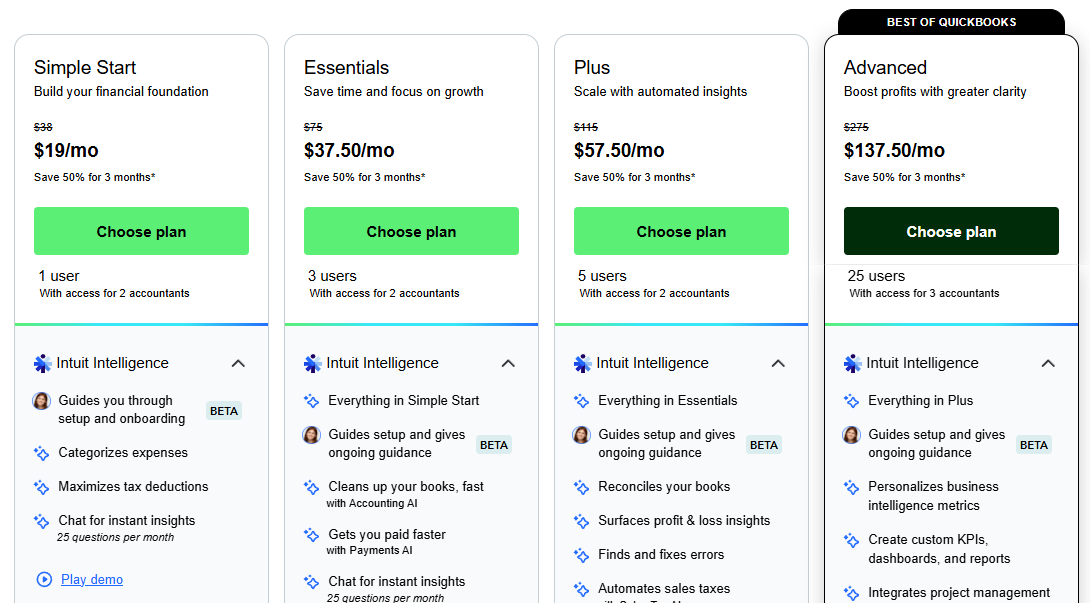
| Plan | Monthly Price (with 50% off promo) | Regular Price | Best For |
|---|---|---|---|
| Simple Start | $19 for 3 months | $38 | 1 user – basic income/expense tracking |
| Essentials | $37.50 for 3 months | $75 | 3 users – adds bill management + time tracking |
| Plus | $57.50 for 3 months | $115 | 5 users – adds inventory + project profitability |
| Advanced | $137.50 for 3 months | $275 | 25 users – custom reporting + dedicated support |
What you need to know:
QuickBooks gives 50% off for 3 months. After that, prices jump to $38–$275/month. Most small businesses need Essentials or Plus – that’s $75–$115/month after the promo ends.
🎮 Ease of Use (Real Experience Style)
I’ll be honest: I got FreshBooks running in one afternoon. Sent my first invoice before dinner. 🍕
QuickBooks took me three days to feel comfortable with—and I’m tech-savvy and understand basic accounting. I watched tutorials, read help articles, and still made mistakes setting up my chart of accounts. 😅
For beginners: FreshBooks removes the intimidation factor completely. The software guides you through setup, uses simple language, and never makes you feel stupid. You can ignore advanced features until you’re ready. 🌟
For advanced users: QuickBooks rewards investment in learning. Once you understand the system, you can customize workflows, create complex reports, and manage intricate financial operations. The complexity becomes power in the right hands. 💪
Most small business owners and freelancers want to spend 10 minutes on accounting software, not 10 hours learning it. FreshBooks respects your time. ⏳
| Ease of Use Factor | FreshBooks 💚 | QuickBooks 💙 |
|---|---|---|
| Setup Time | 30 minutes ⚡ | 3-5 hours 🕐 |
| Learning Curve | Minimal 😊 | Steep 📚 |
| Interface Clarity | Clean & intuitive | Cluttered & complex |
| Mobile Experience | Excellent 📱 | Good but limited |
| Support Quality | Responsive & helpful ⭐ | Inconsistent 🤔 |
👥 Who Should Use Which?
💼 Freelancers
Use FreshBooks. Period.
Whether you’re a writer ✍️, designer 🎨, developer 💻, consultant 📊, or photographer 📷, FreshBooks was built for how you work. Fast invoicing, time tracking, expense management, and reports that make sense.
🏢 Small Businesses (Service-Based)
Use FreshBooks if you’re an agency, consulting firm, law practice, therapy practice, marketing company, or any business that primarily sells services and time. 🎯
You need something that handles client billing elegantly without requiring an accounting background.
🏪 Small Businesses (Product-Based)
Use QuickBooks if you sell physical products, manage inventory, run a retail location, or operate a restaurant. 🍔
You need inventory tracking, purchase order management, and the ability to track cost of goods sold accurately.

🧾 Accountants & Bookkeepers
Use QuickBooks. Your clients probably already use it, you understand its depth, and you can leverage its professional-grade features. 👔
FreshBooks works for accountants serving very small clients, but QuickBooks is the industry standard.
| User Type | Recommended Software | Why? |
|---|---|---|
| Freelancers 💼 | FreshBooks 🏆 | Built for invoicing & time tracking |
| Consultants 🎯 | FreshBooks 🏆 | Perfect for billable hours |
| Creative Agencies 🎨 | FreshBooks 🏆 | Team time tracking + client billing |
| Retail Stores 🏪 | QuickBooks 🏆 | Inventory & POS integration |
| Restaurants 🍕 | QuickBooks 🏆 | Complex cost tracking |
| Product Businesses 📦 | QuickBooks 🏆 | Inventory management essential |
| Accountants 🧾 | QuickBooks 🏆 | Industry standard tool |
📌 Pros and Cons of FreshBooks ✅❌
Pros 👍
- Incredibly easy to learn (30 minutes or less)
- Best-in-class time tracking and invoicing
- Clients love the payment experience
- Amazing customer support (real humans)
- Affordable pricing for freelancers and small teams
- Late payment reminders and auto-fees work flawlessly
Cons 👎
- No real inventory tracking
- Limited to 500 clients on top plan (fine for most)
- Not ideal for accrual accounting
- Fewer reports than QuickBooks
📌 Pros and Cons of QuickBooks ✅❌
Pros 👍
- Industry standard – every accountant knows it
- Powerful inventory, purchase orders, and job costing
- 650+ integrations
- Handles complex tax situations (multiple states, nexus)
- Scales to large teams (50+ employees)
Cons 👎
- Steep learning curve for beginners
- Expensive – most need $90/month Plus plan
- Interface feels cluttered and outdated
- Customer support is slow and scripted
- Easy to screw up (e.g., mis-categorizing transactions)
🏆 Why FreshBooks Is the Better Choice
Let’s cut through the noise. 🔪
Most people reading this article don’t need enterprise-grade accounting software. You need to send invoices that get paid 💵, track expenses for taxes 🧾, and understand whether your business is profitable 📊.
FreshBooks wins because it solves these problems without creating new ones. 🎯
You won’t spend weekends watching YouTube tutorials trying to understand journal entries. You won’t call support because you can’t figure out how to categorize an expense. You won’t feel stupid using software that treats you like an accountant when you’re a creative professional. 🎨
FreshBooks gets you up and running the same day you sign up. You’ll send better-looking invoices than you ever did before. Clients will pay faster because the payment process is smooth. You’ll spend less time on admin work and more time doing what you actually love. ❤️
The time savings alone justify the cost. If FreshBooks saves you two hours per month on invoicing and expense tracking (it’ll save you more), that’s 24 hours per year three full work days you get back to focus on revenue-generating activities. ⏰💰
For freelancers and small service businesses, FreshBooks simply makes more sense than forcing yourself to learn accounting software designed for different business models. 🚀
🤔 When QuickBooks Might Be Better
I believe in honesty, so let me tell you when QuickBooks is actually the right choice. 💯
Choose QuickBooks if you: 👇
✅ Need to track inventory across multiple products and locations. FreshBooks doesn’t handle this well, and you’ll quickly hit limitations.
✅ Run payroll for 5+ employees regularly. QuickBooks Payroll integrates tightly with the accounting system, making tax filing and compliance easier.
✅ Operate a retail business with point-of-sale systems, cash registers, and daily sales reconciliation. QuickBooks connects to POS hardware and software better.
✅ Work with an accountant or bookkeeper who insists on QuickBooks. If they’re managing your books, use the tool they prefer.
✅ Need advanced reporting for investors, loans, or business analysis. QuickBooks generates professional-grade financial statements that banks and investors recognize.
✅ Manage accounts payable with vendor bills, payment terms, and bulk payment processing. QuickBooks excels at vendor management.
QuickBooks is the professional choice for traditional businesses with complex operations. Just know what you’re signing up for. 📋
🎯 Final Verdict
After comparing features, pricing, ease of use, and real-world applications, FreshBooks wins for most small businesses and freelancers. 🏆
It’s faster to learn, simpler to use, and purpose-built for service businesses that invoice clients regularly. You’ll get professional results without professional complexity. ✨
QuickBooks remains the better choice for product-based businesses, companies with inventory, and operations requiring deep accounting functionality. 📦

Choose based on what you actually need, not what sounds more “professional.” The best accounting software is the one you’ll actually use consistently, and for most people, that’s FreshBooks. 💚
Start with a free trial of FreshBooks. Send a few invoices, track some expenses, and see how it feels. If it clicks immediately, you’ve found your solution. If you find yourself needing features it doesn’t offer, then explore QuickBooks. 🔍
Your business is unique, but chances are, you need simple and effective more than you need complex and powerful. 🎯
Must Read:-
- Papaya Global vs Deel: Which Payroll Platform Is Better?
- 5 Best Zoho Project Management Alternatives (2026)
FAQs ❓
Q1. Is FreshBooks better than QuickBooks?
For most small business owners, yes. FreshBooks is easier, more affordable, and gets you paid faster. QuickBooks is only better if you need advanced inventory or have a dedicated accountant.
Q2. Which is cheaper, FreshBooks or QuickBooks?
FreshBooks starts at $19/month. QuickBooks starts at $30/month but most users need the $90/month plan for basic features. FreshBooks is significantly cheaper for the same functionality.
Q3. Is FreshBooks good for small business?
Absolutely. FreshBooks is built specifically for small service-based businesses. It handles invoicing, time tracking, expenses, and basic reporting perfectly. Over 30 million small businesses use it.
Q4. Can FreshBooks replace QuickBooks?
For 80% of users, yes. FreshBooks can handle everything QuickBooks does except advanced inventory and complex sales tax. If you don’t need those, FreshBooks is a better replacement.

👨💻 Hi, I’m Anas Khan, a digital marketing expert with over 5 years of experience in e-commerce and affiliate marketing. I specialize in finding the best coupon codes 💸, Black Friday promotions 🛍️, and discount offers 💥 to help you save big!
I’ve dedicated myself to staying on top of the latest trends 📈 in online deals, so I can offer you the most reliable, tested advice. Whether you’re looking for promo codes or exclusive Black Friday deals, you can trust that my recommendations are based on solid research and personal expertise 🏆.